Children’s Dental Care Mosinee: The Importance of Proper Teeth Brushing in Children
Introduction
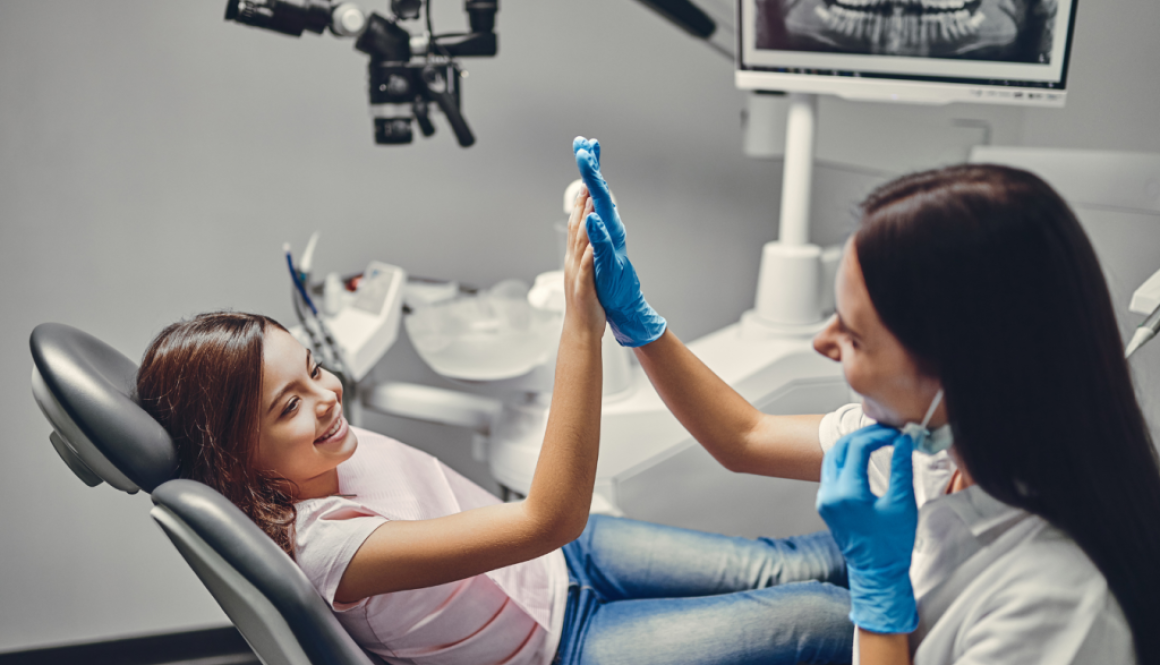
February is National Children’s Dental Health Month, and it’s the perfect time to emphasize the importance of children’s dental care Mosinee. Nearly every parent understands the importance of regular teeth brushing to maintain their little one’s dental health, but not all parents know the best method for helping their kids brush or the best tools to use. While some parents prefer electric brushes over traditional ones (and there are many advantages to electric brushes), we recommend demonstrating proper brushing with a manual toothbrush before moving on to an electric model. Whether using a manual or electric toothbrush, we strongly recommend soft bristles for your kids’ brushes.
Parents can begin using a soft children’s toothbrush with just water for babies as young as 1 year old; some dentists recommend regular brushing as soon as the teeth emerge, if the infant can handle it. Children’s low-fluoride toothpaste can be introduced when your child reaches 18 months. We strongly recommend that you help brush your little one’s teeth at least twice a day—once in the morning and once before bed—to remove and prevent plaque buildup that leads to tooth decay and gum disease, which is a crucial part of children’s dental care Mosinee.
Proper Brushing Technique
The following instructions will help you brush your child’s teeth consistently and effectively:
Place a pea-sized drop of low-fluoride toothpaste onto a soft-bristled children’s toothbrush. You don’t want to overdo it with the paste—more isn’t better.
If your child is small, sit them in your lap, facing away from you. For taller children, you can stand behind them. Gently tilt their head back against your body, which will allow you to see all the surfaces of their teeth.
Angle the bristles of the toothbrush towards the gums at about 45 degrees. Gently move the brush in tight circles to clean the outer surfaces of the teeth and gums.
Continue the same circular motion to gently brush the inner surfaces of the teeth and gums.
For the chewing surfaces of the teeth, use a gentle forward and backward motion.
After brushing every surface of the teeth, encourage your child to thoroughly spit out the toothpaste. It’s not necessary to have your child rinse their mouth after brushing; the small amount of toothpaste left will continue to protect against tooth decay.
We recommend brushing for at least two minutes each session, with most of the time spent addressing the back molars, where cavities most frequently form. Modeling these actions will go a long way in helping your child develop life-long healthy dental habits. Along with a good diet, daily flossing, and regular visits to the dentist, children will have all the tools they need to maintain a healthy smile for life.
Concerning Facts Related to Children’s Dental Care Mosinee
Helping your children brush properly has a significant impact on their health. Here are a few statistics supporting the need for proper brushing and good oral hygiene habits for children:
Almost 20% of kids over the age of two have untreated cavities.
Tooth decay is found in about 20% of 4- and 5-year-olds; by age 17, over 85% of young people have some form of tooth decay.
Children are five times more likely to suffer from tooth decay than from asthma.
Kids miss more than 51 million school hours each year due to dental-related problems.
Poor dental hygiene can affect the self-esteem and school performance of children, making them less likely to smile or engage in conversation.
Poor dental hygiene in children can lead to poor nutrition and chronic sleep problems.
Taking care of children’s dental care Mosinee from a young age is essential to avoid these common problems and ensure their overall well-being.
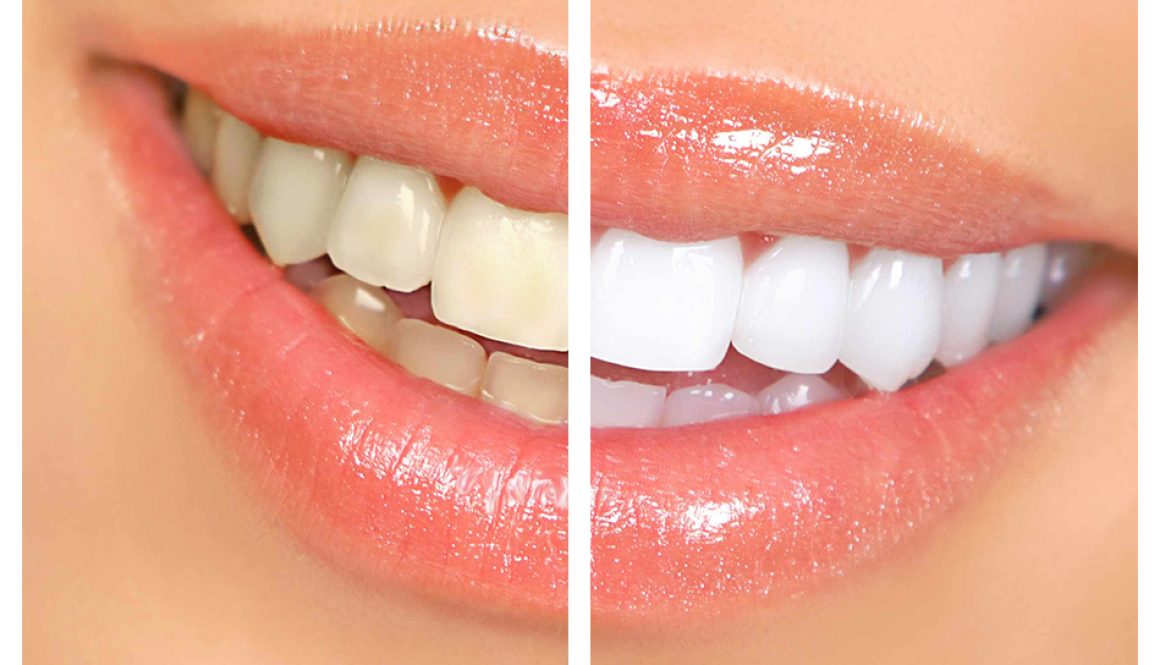
Achieving a brighter, more confident smile has never been easier, thanks to the various teeth-whitening options available today. At Mosinee Smiles, we offer professional and personalized Mosinee dentist teeth whitening treatments that ensure safe and effective results. Whether you’re considering over-the-counter products or professional in-office services, understanding your options is the first step toward a radiant smile.
Understanding Teeth Whitening Options
Teeth whitening products fall into three main categories: toothpastes and mouthwashes, whitening strips, and gel trays. While whitening toothpastes and mouthwashes are cost-effective, they primarily remove surface stains and have limited active ingredients, such as hydrogen or carbamide peroxide. For noticeable results, whitening strips and gel trays provide a better alternative. These products can brighten teeth significantly within days or weeks of consistent use.
Whitening Strips: A Convenient Option
Whitening strips are among the most popular over-the-counter solutions for at-home teeth whitening. Made from a flexible material called polyethylene, these strips are coated with a bleaching agent—usually hydrogen or carbamide peroxide—and an adhesive to keep them securely in place. When applied to the teeth, hydrogen peroxide oxidizes, bleaching stains and making teeth appear whiter.
Most whitening strip treatments require daily application for about 30 minutes over two weeks. While effective for many, they are less successful on stubborn stains caused by tetracycline or fluorosis and cannot whiten dental restorations.
The Professional Difference: Mosinee Dentist Teeth Whitening
For superior results, Mosinee dentist teeth-whitening treatments are the gold standard. Professional whitening not only delivers faster and more noticeable results but is also safer due to expert supervision. One of the most popular methods involves using custom-fit gel trays that ensure even application of the bleaching agent.
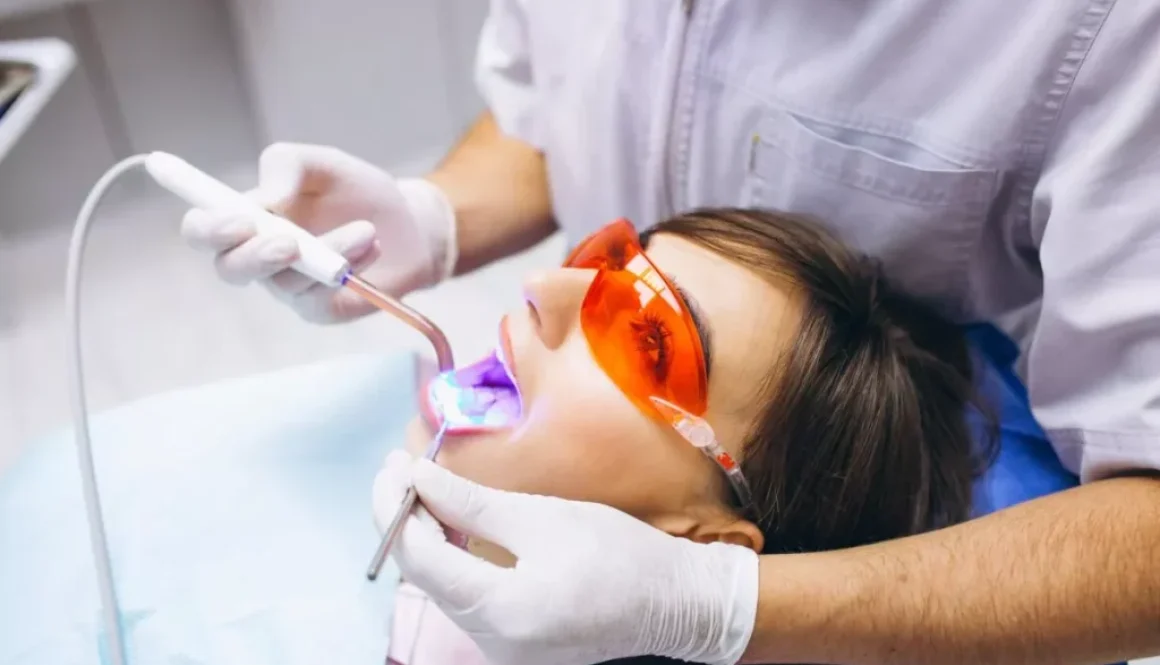
During a professional session, a dentist applies a specialized whitening gel containing hydrogen or carbamide peroxide. This gel opens the pores in the enamel, allowing the active ingredients to penetrate and break down deep stains. Many in-office treatments also use LED light to accelerate the whitening process, making it possible to achieve a brighter smile in just one or two visits.
Everyday Tips for Maintaining a Bright Smile
Consistency is key to keeping your smile bright after Mosinee dentist teeth whitening treatments. Regular brushing and flossing remain essential for preventing plaque buildup and discoloration. Incorporating tooth-friendly foods into your diet can also enhance your smile naturally.
Apples and strawberries: These fruits contain malic acid, which helps remove surface stains.
Celery and carrots: High water content stimulates saliva production, which naturally washes away bacteria.
Pineapple: The bromelain enzyme in pineapple has natural stain-removing properties.
Dairy products: Foods like cheese and milk are rich in calcium, which strengthens enamel and prevents erosion.
Preventing Stains
To maximize the longevity of your Mosinee dentist teeth whitening results, limit exposure to stain-causing beverages such as coffee, tea, and wine. When consuming these drinks, use a straw to minimize contact with your teeth. Avoid brushing immediately after eating or drinking acidic foods, as weakened enamel can become damaged. Instead, rinse your mouth with water to neutralize the acidity before brushing.
Replacing sugary energy drinks with water is another excellent way to protect your teeth and maintain their brightness. Simple lifestyle adjustments can make a significant difference in preserving your radiant smile.
Why Choose Mosinee Dentist Teeth Whitening?
With Mosinee dentist teeth whitening, you gain access to advanced technology and professional expertise. Our treatments are tailored to your unique needs, ensuring effective and long-lasting results. Whether you’re looking to address deep stains or maintain your natural brightness, our dental team is here to guide you every step of the way.
By combining professional treatments with good oral hygiene practices, you can achieve the smile of your dreams. Schedule your consultation with Mosinee Smiles today and discover how Mosinee dentist teeth whitening can transform your confidence and overall appearance.
Contact Us
For more information on teeth whitening or to set up an appointment for a profession in-office or take-home whitening treatment, please call us at (715) 693-3255.
The content on this blog is not intended to be a substitute for professional medical advice, diagnosis, or treatment. Always seek the advice of qualified health providers with questions you may have regarding medical conditions.
Dental veneers are an excellent solution for achieving a brighter, more attractive smile. At Mosinee Smiles, our experienced team specializes in dental veneer services, offering high-quality care tailored to each patient’s unique needs. Let’s explore everything you need to know about dental veneers, from their benefits to the application process.
What Are Dental Veneers?
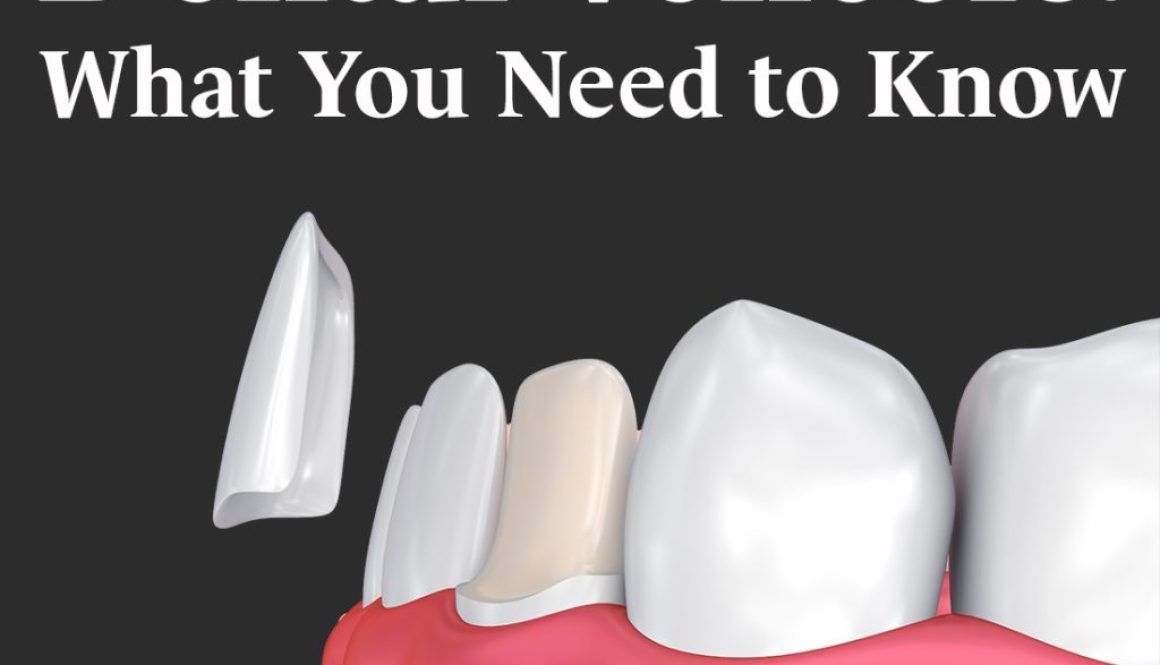
Dental veneers are ultra-thin shells made of porcelain or composite resin that are permanently bonded to the front surface of teeth. They are designed to enhance the appearance of your smile by addressing issues such as discoloration, chips, gaps, or misshapen teeth. Crafted in a dental laboratory using precise measurements and models provided by our dentist, dental veneers Mosinee dentist treatments deliver beautiful and lasting results.
Who Can Benefit from Dental Veneers?
Many individuals can benefit from dental veneers Mosinee dentist services. Veneers are ideal for patients with:
Chipped, stained, or decayed teeth
Crooked or gapped teeth
Teeth with other cosmetic blemishes
Patients undergoing procedures such as Invisalign or full-mouth rehabilitation often choose veneers to complete their smile transformation.
How Are Dental Veneers Applied?
The process of applying dental veneers Mosinee dentist treatments typically involves three or four visits:
Consultation: During the first visit, our dentist will discuss your goals, review your medical and dental history, examine your teeth, and explain the procedure in detail.
Measurements and Models: In the second appointment, precise measurements and impressions of your teeth are taken. These are sent to a dental lab to craft your custom veneers. Multiple X-rays and photographs may also be taken at this stage.
Temporary Veneers: At the third visit, temporary veneers are applied after removing a thin layer of enamel from the teeth. Tests are conducted to ensure proper fit, bite, and comfort. Additional impressions may be taken to perfect the final veneers. Temporary veneers are usually worn for about two weeks.
Permanent Veneers: During the final appointment, the temporary veneers are removed, and the permanent ones are bonded to the prepared teeth. The veneers are then tested, adjusted, and secured for a flawless appearance and fit.
How Long Do Dental Veneers Last?
Porcelain veneers typically last 10 to 20 years, according to the American Dental Association. Composite resin veneers generally last 5 to 7 years. The longevity of dental veneers Mosinee dentist treatments depends on proper care, including good oral hygiene and avoiding habits like biting hard objects.
Why Choose Dental Veneers?
Patients often prefer dental veneers Mosinee dentist treatments for several reasons:
Minimally invasive: Veneers preserve more of the natural tooth structure compared to crowns.
Aesthetics: Veneers offer a natural, seamless appearance with less risk of gum margin visibility over time.
Stability: Teeth with veneers are less likely to shift or move compared to other dental restorations.
Cost-effective: Veneers can be a more affordable option compared to crowns or bridges in some cases.
How Much Do Dental Veneers Cost?
The cost of dental veneers Mosinee dentist services varies based on factors such as preparation work, veneer material, and the number of teeth being treated.
Porcelain veneers: $900 to $2,500 per tooth
Composite resin veneers: $500 to $1,500 per tooth
Our dentist will provide a detailed cost estimate during your consultation.
Where Can I Find More Information?
For more information about dental veneers Mosinee dentist, contact our office. Our friendly staff will guide you through the process and answer any questions you may have. Call us today to schedule a consultation and take the first step toward your dream smile!
Mosinee Dentist Halloween Tips: Enjoy Candy While Protecting Your Smile
The Halloween season offers more candy than any other time of year, making it a treat-filled delight for kids and adults alike. As dental professionals—and secret candy enthusiasts ourselves—we know how important it is to strike a balance between enjoying the season’s sugary goodness and maintaining great oral health. Here are Mosinee dentist Halloween tips to help you savor your treats while keeping your teeth healthy.
Not All Candies Are Created Equal
While everyone has a favorite candy, not all sweets treat your teeth kindly. Soft and sugar-free candies are the least harmful options. They’re easier to chew, don’t stick to your teeth as much, and are less likely to damage dental work like fillings or crowns.
On the other hand, hard and sticky candies, such as caramels and taffies, linger on your teeth longer, increasing the chances of plaque buildup and cavities. Opt for chocolates, which are easily washed away with water, and avoid candy that clings to your teeth.
Why Candy Can Be Harmful to Your Teeth
1. Sugar Overload
Candy’s high sugar content feeds harmful bacteria in your mouth. These bacteria produce acid, which eats away at tooth enamel and leads to cavities. The American Heart Association recommends no more than 9.5 teaspoons of sugar per day, but the average child consumes over 32 teaspoons daily—especially during Halloween!
2. Sticky Consistency
Sticky candies adhere to your teeth, creating an ideal environment for plaque to form. Plaque begins developing just 20 minutes after eating, and the longer it remains, the more damage it can cause. Sticky treats can also loosen or dislodge dental work.
3. Addictiveness
Sugar is designed to be addictive, triggering pleasure chemicals in your brain. This makes it hard to stop at one piece of candy. Eating excessive amounts increases your risk of tooth decay and gum issues.
Mosinee Dentist Halloween Tips for Oral Health
Enjoying candy doesn’t mean sacrificing your dental health. Here are some great expert tips for a healthier Halloween:
Choose Soft Candies and Chocolates: These are less likely to stick to your teeth and are easier to rinse away.
Avoid Hard and Sticky Treats: Hard candies stay in your mouth longer, exposing teeth to sugar and acids for extended periods. Sticky candies cling to teeth and are harder to remove.
Drink Water: After eating candy, rinse your mouth with water to wash away lingering sugar and acid.
Brush and Floss Promptly: Plaque forms within 20 minutes of eating, so brushing and flossing soon after enjoying candy is crucial. Use fluoride toothpaste for added protection.
Moderation Is Key: Limit your candy consumption to one or two pieces at a time rather than grazing throughout the day.
Maintaining Dental Health During Halloween
Halloween is the perfect time to teach kids about balancing treats with proper oral hygiene. Brushing and flossing should be a fun family activity. Encourage your children to drink water after eating candy and avoid sugary drinks like sodas.
If you have dental work such as crowns or braces, follow the best Mosinee dentist Halloween tips to prevent any damage. Sticking to soft candies will reduce the risk of issues.
Need More Halloween Tips?
We’re here to help you maintain a healthy smile throughout Halloween and beyond. If you have questions about diet, candy choices, or oral hygiene, please call our office or ask at your next visit.
Follow these best Mosinee dentist Halloween tips to enjoy your candy guilt-free while keeping your smile bright and healthy. Have a safe and happy Halloween!
There comes a time for many people when traditional methods of tooth restoration are no longer viable. The impairment of the natural teeth has crossed a threshold where fillings are impossible or imprudent. In these cases, many people choose dentures, usually due to their comparatively low cost. For others, a welcome alternative to dentures is full-mouth rehabilitation (sometimes called full-mouth restoration or full-mouth reconstruction), which in the broadest sense is using multiple advanced restorative techniques to rebuild your natural, healthy smile. Mosinee Smiles is proud to offer this service to Mosinee and our Mosinee-area communities.
Who Are Candidates for Full-Mouth Rehabilitation?
Our office stands by its commitment to never try to “upsell” or strong-arm patients into treatments. We never want anyone to feel that they’re being railroaded when it comes to any procedure, especially one that involves a significant investment of time and money. That’s part of the reason why we created this blog article: We want our patients to be informed of every option and to have a clear understanding of the treatments we might recommend for them. Transparency and clear communication are central to how we do dentistry, and candidates for Mosinee full-mouth rehabilitation can rest assured that from your first consultation to the very last appointment, you will know what’s going on with your treatment plan in terms of services provided and the costs they entail. In the end, whether our patients choose dentures or full-mouth rehabilitation (or some other treatment option), we will always provide them with the same personalized care and everything they need to make the best decision for themselves.
That said, there are several reasons why people seek out full-mouth rehabilitation. Here are the most common:
Decay of teeth – Many candidates for full-mouth rehabilitation have experienced extensive tooth decay, sometimes through poor dental hygiene habits and diet, but sometimes as a result of things like medications or genetic/hereditary factors.
Wearing down of teeth – Many of our full-mouth candidates have suffered from an erosion of their tooth enamel because of persistent grinding, acid reflux, or simply years of use.
Damage or trauma to the teeth – Accidents, sports injuries, or other impacts to the teeth will often bring about the need for an overhaul of the bite and smile.
Persistent problems with the jaw and/or tooth alignment – Often full-mouth rehabilitation is sought out when there’s a misalignment of the jaw and/or teeth, which can lead to tooth damage, ongoing headaches, and muscle pain.
While there are other reasons for seeking out full-mouth rehabilitation, candidates most commonly have one of these four issues.
What’s the Process for Full-Mouth Rehabilitation?
No two patients will ever have exactly the same experience with full-mouth rehabilitation. At our office, a central guiding principle is providing personalized care, whatever the service being provided. We want to know you and your thoughts well before we begin on any treatment plan. But every patient who decides to embark on full-mouth rehabilitation can expect similar things from the overall experience.
Consultation with the dentist – You’ll start off by being scheduled for an appointment to meet with the providing doctor to discuss your situation, conduct a thorough examination of your teeth and oral health, answer any questions you might have, and begin the steps for a treatment plan going forward. There are situations where you might meet with the dentist only to discuss the full-mouth treatment and then return for the thorough examination at a second appointment.
X-rays and impressions of your teeth – To carry out any full-mouth rehabilitation treatment plan, you will need to have current X-rays, along with a 3D scan and/or impressions taken of your bite.
Initial photographs – We’ll also take photos of your teeth at this time — not only do we love to be able to show you the wonderful before-and-after imagery at the end of the treatment, the photos will help guide things like alignment of the teeth and coloring of any crowns.
Finalized treatment plan – Once our dentist has all the information needed on the condition of your teeth, the health of your gums and bone structure, the alignment of your jaw, and the appearance of your smile from an aesthetic standpoint, a step-by-step treatment plan will be created to guide the rest of the process. As alluded to above, no two treatment plans will ever be the same, and they will factor in your specific needs and desires for the final outcome. Costs and time commitments will be made clear, and any further questions will be answered.
Rehabilitative procedures – These procedures will obviously vary from patient to patient, depending on their specific needs. Some patients undergoing full-mouth rehabilitation might only need two or three from the following list, where others will require many or all of the services. All of these procedures will have been discussed with the patient ahead of time and integrated into the unique treatment plan.
Teeth cleaning/periodontal care – The first procedure most full-mouth patients will undergo ensures that natural teeth and gums are as healthy as possible before moving forward.
Crown lengthening – In order for crowns (or possibly bridges) to be placed on those teeth that need them, healthy tooth structure may have to be exposed.
Gum contouring – In addition to crown lengthening, patients’ gums may need to be shaped to present their most symmetrical and healthiest looking smile.
Orthodontics – Our dentist may recommend Invisalign® or other orthodontic treatments to help address bite issues and move the patient’s teeth into the optimal position for restoration.
Bone grafting – If patients opt for dental implants to replace damaged or missing teeth, bone grafts are sometimes required to provide enough stability and structure for the implant to be anchored properly.
Dental implant placement – Using 3D imagery of the patient’s mouth and jaw, our dentist will create a guide and anchor into the bone a titanium implant that will later receive a ceramic crown or potentially anchor a bridge restoration.
Crown preparation – In order for any crowns to be placed on a patient’s natural teeth, existing tooth structure will have to be reduced and shaped to receive the crowns.
Temporary crown placement – Once the natural teeth needing crowns have been prepared, temporary crowns will be placed to ensure proper fit and bite alignment. These temporary restorations will give the patient time to grow accustomed to their new teeth and will be worn until our lab finishes crafting the permanent ceramic crowns.
Placement of permanent crowns or other restorations – Once we have back from the lab the patient’s final crowns (or potentially their bridges, veneers, inlays, or overlays), the dentist will remove any temporaries and permanently cement the final restorations to the existing teeth.
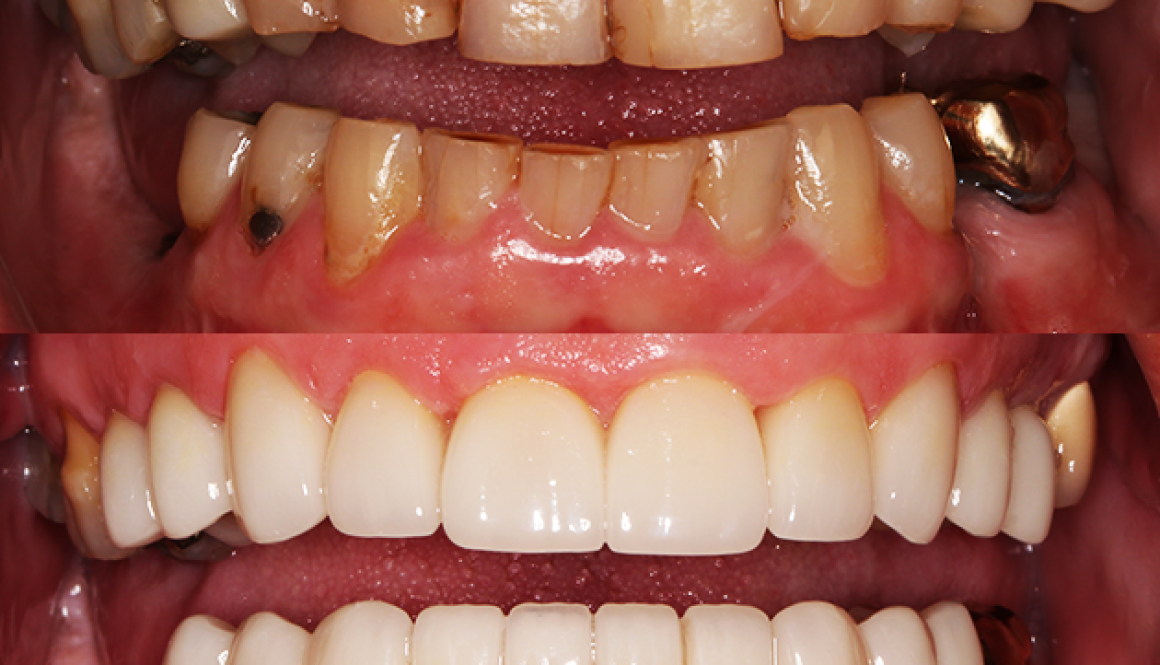
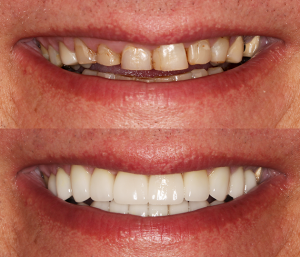
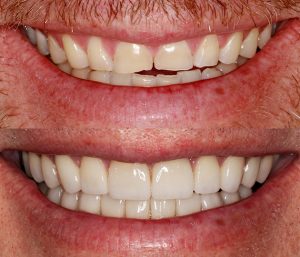
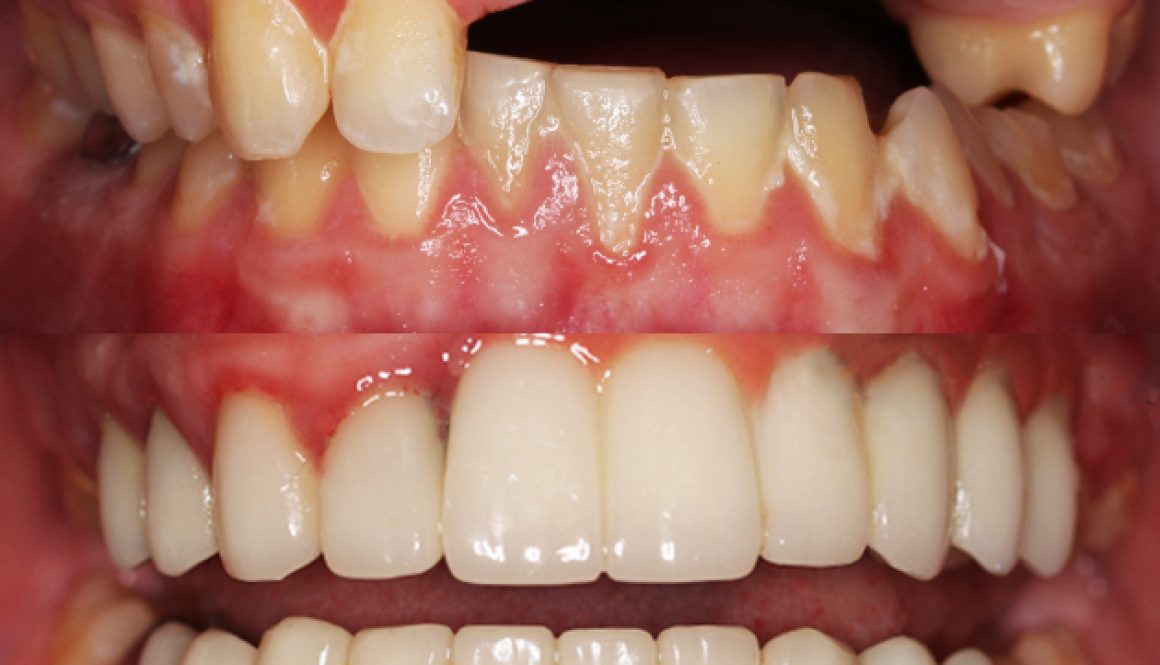
Final photographs – Once patients have completed the entire full-mouth treatment plan, we take photos of the final result. We use these for our own documentation and education purposes, and we may also — with patients’ permission — share them publicly on our website. The before-and-after imagery (like the photos included in this blog) are an excellent way to educate and help prospective full-mouth patients make decisions about moving forward with the treatment.
How Long Does Full-Mouth Rehabilitation Take?
The duration of the entire process of full-mouth rehabilitation will vary a great deal from person to person based on dental needs, desired outcomes, and other factors like age and budget. There are some patients who complete the entire rehabilitation within two months. Other patients may choose to address different needs over the course of a year or more. Some of the procedures in the process require built-in waiting time. For example, if a bone graft is needed, the healing time can be up to four months before an implant can safely be placed. If orthodontic treatment is needed to move the teeth into proper position, the waiting time could be six months to a year. Whatever your particular dental needs, you can rest assured that you will know how long the process will take when you go over your individualized treatment plan with the dentist.
How Much Does Full-Mouth Rehabilitation Cost?
This question is at the front of most patients’ minds when they schedule their initial consultation. And, as you can guess from what you’ve already read, the answer is dependent upon each individual’s dental needs and desired outcomes. Cost is also determined by what types of treatment are chosen: A patient who chooses dental bridges to replace missing or damaged teeth will pay less than a patient who chooses dental implants for the same replacement. A patient may choose veneers or inlays/overlays over crowns. One thing is certain and consistent: At Mosinee Smiles, you will never be surprised by costs. We will talk you through every step of the process in your treatment plan, alerting you to the various prices of different procedures, explaining how much of the treatment may be picked up by insurance, and helping you to make the best decision for your individual circumstances. Because of the variety factors and potential services involved, it’s difficult to give an average cost for full-mouth rehabilitation. On the lowest end, a patient is looking at a cost of about $15,000. For more extensive work, the cost can run in the $30,000 to $45,000 range. That is, without question, a great deal of money to spend on one’s teeth; but for those who have chosen to go through the process, having their natural smile restored to health is well worth the investment.
Where Can I Learn More About Full-Mouth Rehabilitation?
The best resource we can provide is our team, which has a great deal of experience working with patients on their full-mouth treatment plans. For more information on how the process works or questions related to your specific situation, please give our office a call at (715) 693-3255. We look forward to speaking with you and helping you on your way to a fully restored smile! Below are a few more before-and-after photos of full-mouth rehabilitation patients, along with additional web resources on this subject.
If you’ve lived long enough, you’ve likely heard someone compare the pain they’ve felt to the pain of a root canal. Before many people are likely old enough to even need a root canal, they’ve already formed an opinion about this treatment as something excruciating and to be avoided at all costs. While we do recommend avoiding the need for root canal therapy altogether, we can attest that this treatment in no way deserves its bad reputation, and we’d like to take a moment on this National Root Canal Appreciation Day to dispel those misconceptions.
Just What Is a Root Canal?
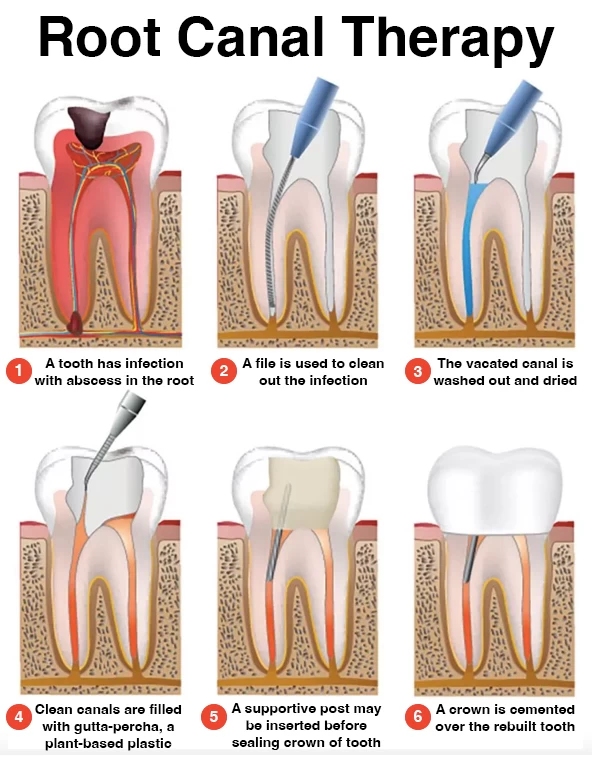
What most people refer to as a root canal is an endodontic treatment in which the infected pulp and nerve in the root of a tooth are removed, the root canal is cleaned out, the space is filled, and the tooth is sealed and crowned to restore the tooth to healthy function. Because this treatment preserves your natural tooth structure and bite, it’s much preferred to extraction whenever possible. Despite the bad publicity around the treatment, it functions to immediately alleviate tooth pain caused by rampant infection and often abscess at the tooth’s root. This helpful graphic shows the series of steps the dentist or an endodontist will take in preserving a tooth using root canal therapy mosinee.
What Causes a Patient to Need Root Canal Therapy?
There are numerous factors that can play into the kind of deep infection of a tooth that requires endodontic treatment. Oftentimes it is highly preventable tooth decay that makes its way to the pulp and roots of a tooth. In other cases, a patient has had multiple procedures done on a tooth that over time have led to the susceptibility of that tooth’s core to infection. Sometimes a chip, crack, or other injury to a tooth can lead to deep infection. There are even cases when a tooth has no visible signs of damage or decay, but a trauma has lead to pulp damage that necessitates root canal therapy.
What Are the Signs I Need Root Canal Therapy?
With regular dental visits, your hygienists and dentist will often be able to head off instances of deep infection and hopefully address the issue before root canal therapy is needed. But there are times when an infection flares up quite suddenly, and it’s good to know the warning signs so you can alert our office right away. Here are some of the most common conditions associated with infection of a tooth’s pulp and roots:
Cracked or chipped tooth
Sharp, severe pain when chewing or biting down
Tender and/or swollen gums
Abnormal bulging or formation of pimples on the gums
Darkening or decay of the gums
Keen tooth sensitivity to hot or cold
While none of these conditions is a certain indication that root canal therapy is needed, you should always alert us to them right away: Acting quickly can help to avoid further damage, infection, and the need for more extensive (and expensive) endodontic treatment.
Seriously, Will It Hurt?
If you had root canal treatment before modern techniques and anesthetics, it might’ve lived up to its reputation as a painful procedure. Today, however, most patients who undergo the treatment describe it as being relatively painless. We take great care to ensure our patients are fully numb and remain fully numb when a root canal (or any procedure) is performed. Progressing deliberately and skillfully and seeking constant feedback, your provider will keep you as free from pain as any other dental treatment. Many patients claim that root canal therapy was much more comfortable for them than fillings.
How Much Does Root Canal Therapy Cost?
The cost of root canal treatment will vary a good deal depending on the level of infection, the complexity of the case, and the tooth in need of repair. For example, molars are generally more difficult to treat, and the cost therefore tends to more. Broadly speaking, root canal is a much more cost-effective treatment than tooth extraction and replacement, since a bridge or implant will be called for to replace an infected tooth that’s extracted. Everyone’s situation is different, but our office will always be completely transparent and up-front when it comes to costs. For a little perspective, though: As of 2021, the average cost for root canal therapy for a front tooth was around $900, the average cost for a bicuspid was around $1,000, and the average cost for a molar was about $1,600.
Sports injuries and automotive collisions can sometimes impact the mouth with such force that it causes severe dental trauma Mosinee patients cannot ignore. In these situations, the damage may be so extensive that a dentist like Dr. George Knoedler cannot save the affected teeth with treatments like a root canal or a crown.
In cases of severe dental trauma Mosinee, an emergency tooth extraction might be necessary to alleviate pain and prevent further complications. Once the gums have fully healed, Dr. Knoedler will guide you through your options for restoring or replacing the missing teeth. For those who prefer to avoid oral surgery for a dental implant or an implant-supported bridge, a partial denture can be an excellent solution.
A partial denture is a removable dental appliance designed to mimic the appearance and function of your missing teeth. It is set into a pink base crafted to match the natural shape and appearance of your gum tissue. To ensure stability, the partial denture may include hardware to lock it securely into place with the adjacent teeth.
If you reside in the Mosinee, Wisconsin, area and experience severe dental trauma Mosinee, do not delay seeking treatment. Call 715-693-3255 to schedule an appointment at Mosinee Smiles. Dr. Knoedler and his team are dedicated to providing expert care to help you regain your smile and oral health.